


Mountains where people go and struggle but also enjoy
Nepal has always been a place with high mountains calling many travelers from around the world. People go there to climb peaks, cross passes, and feel something very strong inside. The air is thin, and paths are rough, but the experience is very deep and unforgettable. Some journeys are climbing, some are trekking, but all give the same feeling, like standing very close to the sky.
In this article, we talk about four famous high-altitude adventures. Each one is different but also similar in challenge, beauty, and hard walking days. These are Island Peak climbing, Lobuche Peak climbing, Mera Peak climbing, and the Everest Cho La Pass trek. All are known in the Himalayan region, and people choose them for adventure and personal tests.
Island Peak Climbing: Ice, wind, and a long walk up feeling
Island Peak is one of the most popular beginner climbing mountains in the Everest region. Local people also call it Imja Tse, but most visitors know it as Island Peak. The shape of the mountain looks like an island in the sea of ice; that’s why the name came.
The journey starts from Lukla and goes through the Namche Bazaar and Dingboche area. Walking days are many, and the body slowly gets used to altitude. After base camp, the real climbing part starts where the ice wall and rope section appear.
Climbing is not a simple walk; it needs crampons, rope handling, and guide support. Weather also changes very fast: sometimes sun, sometimes snow, sometimes wind. Many people feel tired but still continue because the view from the top is a very strong reward.
From the summit, Everest, Lhotse, and Ama Dablam all look very near, like giants standing around. Some climbers feel emotional also because hard effort finally reaches a result. Even breathing is difficult there, but the moment is unforgettable.
Island Peak climbing is good for people who want their first experience of Himalayan peak climbing but still want a serious adventure. It is not too easy and not too extreme but in the middle, where learning and challenge both exist.
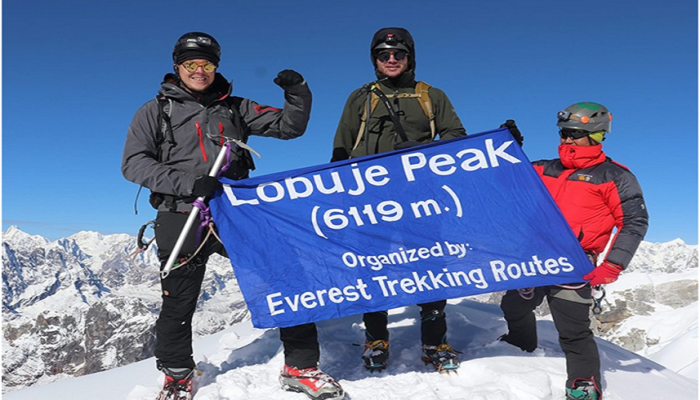
Lobuche Peak Climbing: A rocky path and a strong altitude test.
Lobuche Peak climbing is another popular climbing adventure near the Everest Base Camp route. This peak is more technical than Island Peak in some sections. There are two main parts, Lobuche East and Lobuche West, but the East one is mostly used for climbing permits.
The route goes through the same Everest trail to the village of Lobuche. After that, the path turns towards the base camp of the peak. Terrain becomes more rocky; glacier crossings and steep ice slopes appear. Here climbers must use rope and ice tools more carefully.
Read More: Four Giant Trails of Nepal: Walk Where Earth Touches Sky and Heart Feels Wild Freedom
The climb is physically strenuous, and the altitude is also very high. Many people feel headaches, low energy, and slow walking have become normal. But still, the team moves forward step by step.
The final push to the summit is steep and mixed with ice and rock. Weather can also make the situation harder. But when the summit is reached, the view of Everest, Nuptse, Pumori, and other peaks spreads like a white ocean around it.
Lobuche Peak climbing gives a more serious climbing feeling compared to Island Peak. It is like the next-level step for people who have already done some trekking on peaks before. Experience is tough but also very rewarding.
Mera Peak Climbing: A long valley walk and the highest trekking peak feeling.
Mera Peak climbing is known as the highest trekking peak in Nepal. It is very high in altitude but technically not very difficult, unlike other peaks. That makes it special because long endurance matters more than technical skill.
The journey to Mera Peak starts from the lower Solu region or sometimes from the Lukla side also. The trail goes through forest, river valley, and small villages and then slowly enters remote high-mountain zones. The path is long, and sometimes a lonely feeling also comes because it is a less crowded area.
Climbing itself is not very technical, but the altitude is extreme. Many climbers feel slow breathing and walking become like a step-by-step patience game. Snow slopes are long, and summit pushes take many hours.
But the view from the top is one of the best in the Himalayas. From Mera Peak’s summit, Everest, Makalu, Cho Oyu, and Lhotse are all visible in clear weather. It is like standing on the top roof of the world.
Mera Peak climbing is more about endurance, mental strength, and extensive trekking experience. People who like quiet trails and big altitude challenges mostly choose this peak.
Everest Cho La Pass Trek: Ice pass crossing between giant mountains
The Everest Cho La Pass Trek is not a climbing peak but a high mountain pass crossing adventure. It connects Gokyo Valley and the Everest Base Camp region. This trek is very famous because it combines two beautiful valleys and also includes glacier pass crossing.
Routes usually start from Lukla and go through Namche, Tengboche, and Dingboche, then split toward the Gokyo or Everest Base Camp side. Cho La Pass is the highest and most difficult point in this route.
The pass area is full of ice, rock, and sometimes hidden snow cracks. Weather can change fast, and visibility becomes low. Trekking here requires careful steps, and sometimes guide help is very important.
After crossing the pass, the landscape changed suddenly. One side of Gokyo Lakes is blue water, the other side is Everest Valley’s white glacier world. This contrast makes the journey very special.
The Everest Cho La Pass trek is not just walking; it is like an adventure crossing between two mountain worlds. Many trekkers feel strong achievement after crossing the pass because it is physically and mentally challenging.
Comparison feeling of all these adventures
All four adventures are different types but also have the same Himalayan spirit inside. Island Peak and Lobuche Peak are more climbing-focused, where rope, ice axe, and summit push matter. Mera Peak is a long, endurance, high-altitude journey with less technical difficulty but more stamina demands. The Everest Cho La Pass trek is a trekking challenge with dangerous pass crossings.
Read More: Everything You Need to Know About the Everest Base Camp Trek with Sherpa Expedition & Trekking
Each one gives a different emotion. Some give climbing a victory feeling, some give long journeys patience, and some give crossing achievement. But all have a deep connection with the Himalayas.
Life on high mountains and the slow rhythm of the journey
In all these adventures, life becomes very simple. Wake up early, walk slowly, eat basic food, and sleep early. Internet and fast-life things disappear slowly. Only mountains, weather, and breathing remain important.
People often think climbing or trekking is only physical activity, but actually mental strength is also very important. Cold wind, tired legs, and thin air test patience again and again. But every small step also gives confidence.
Local Sherpa support, mountain lodges, and natural beauty make the journey possible. Without them, these high routes cannot be done easily. So teamwork and guidance are always an important part.
Final thoughts: mountains that change walking people inside
These four adventures—Island Peak climbing, Lobuche Peak climbing, Mera Peak climbing, and the Everest Cho La Pass trek—are not just travel plans. They are experiences where people meet challenges, silence, and natural power.
Some people go for a summit, some go for a pass, but almost everyone returns with a different mindset. Mountains stay the same, but travelers feel changed inside.
Hard days, long walks, cold nights, and high altitude all become memories later. And even after coming back, my mind sometimes still walks on those rocky paths and snowy ridges.
The Himalayas always remain a calling place for those who want more than a normal journey.
Contact Details
Everest Trekking Routes Pvt. Ltd.
16 Khumbu, Nayabazaar, Kathmandu, Nepal
Mobile: +977-9843467921 (Rabin)
Email: [email protected]
URL:– www.everesttrekkingroutes.com